Botanical plant encyclopedia
Click on a plant to view the full botanical profile
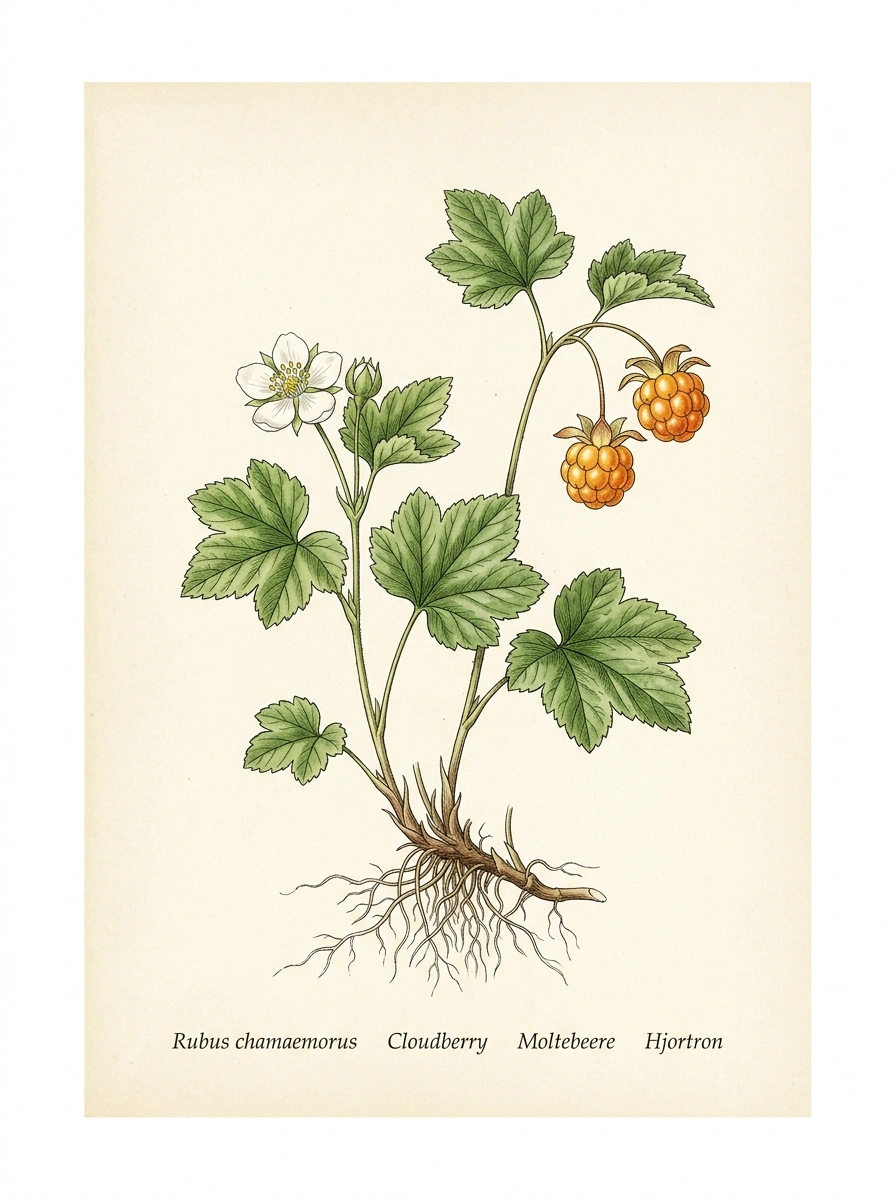
Cloudberry (Rubus chamaemorus)
Schwedisch: Hjortron | Rubus chamaemorus
The cloudberry is the liquid gold of northern Sweden. Their amber-colored fruits grow on barren raised moors and are extremely rich in vitamins.
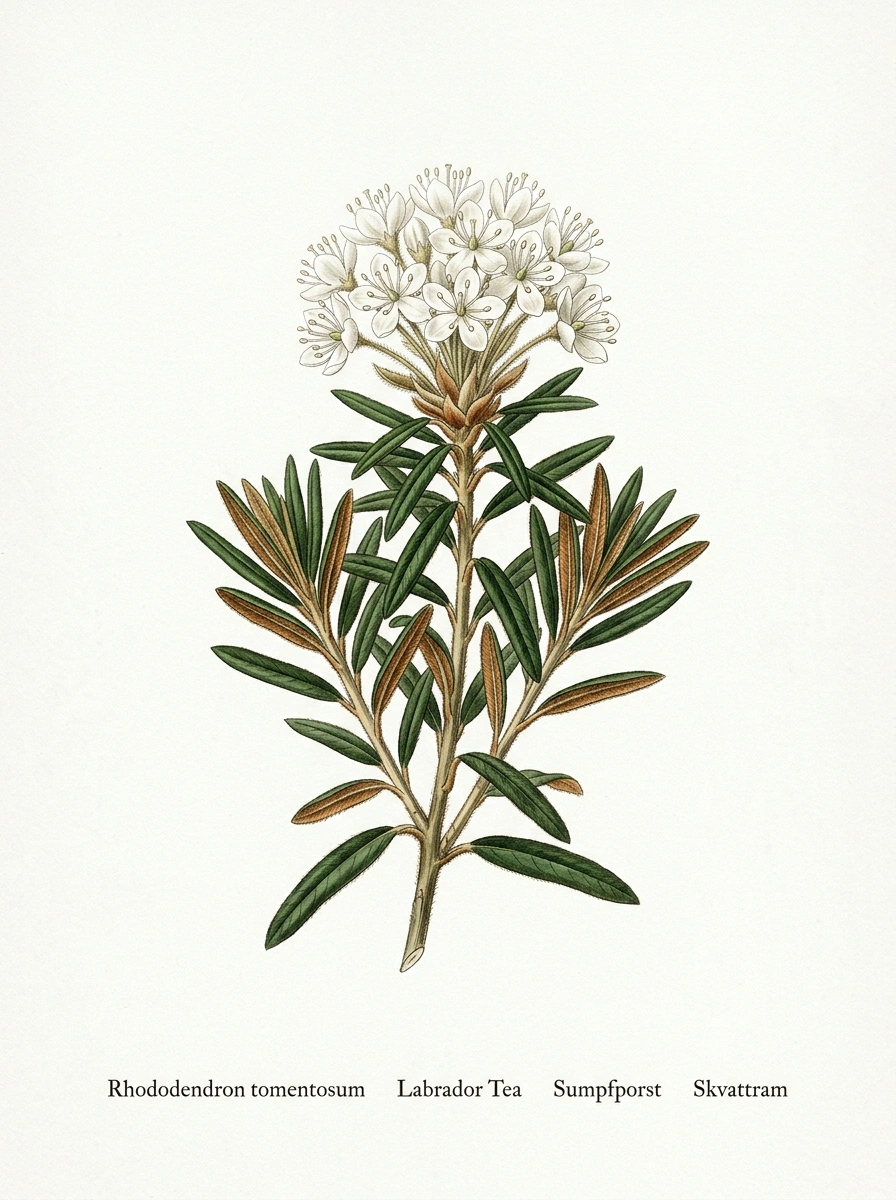
Marsh Pork (Rhododendron tomentosum)
Schwedisch: Skvattram | Rhododendron tomentosum
An evergreen bog shrub with an intensely resinous scent. All parts of the plant contain the slightly toxic essential oil Ledol.
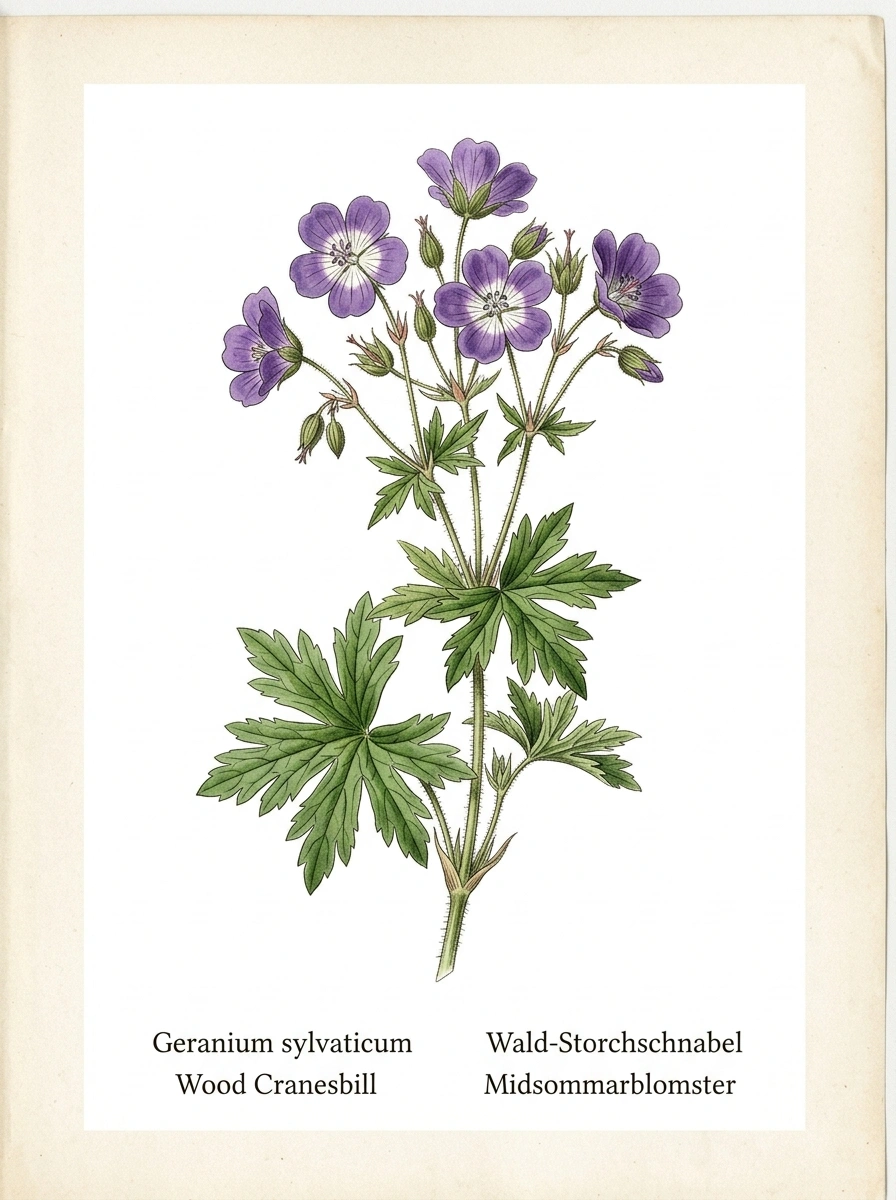
Forest cranesbill (Geranium sylvaticum)
Schwedisch: Midsommarblomster | Geranium sylvaticum
Sweden's famous midsummer flower 'Midsommarblomster' with bright violet-blue flower wreaths.
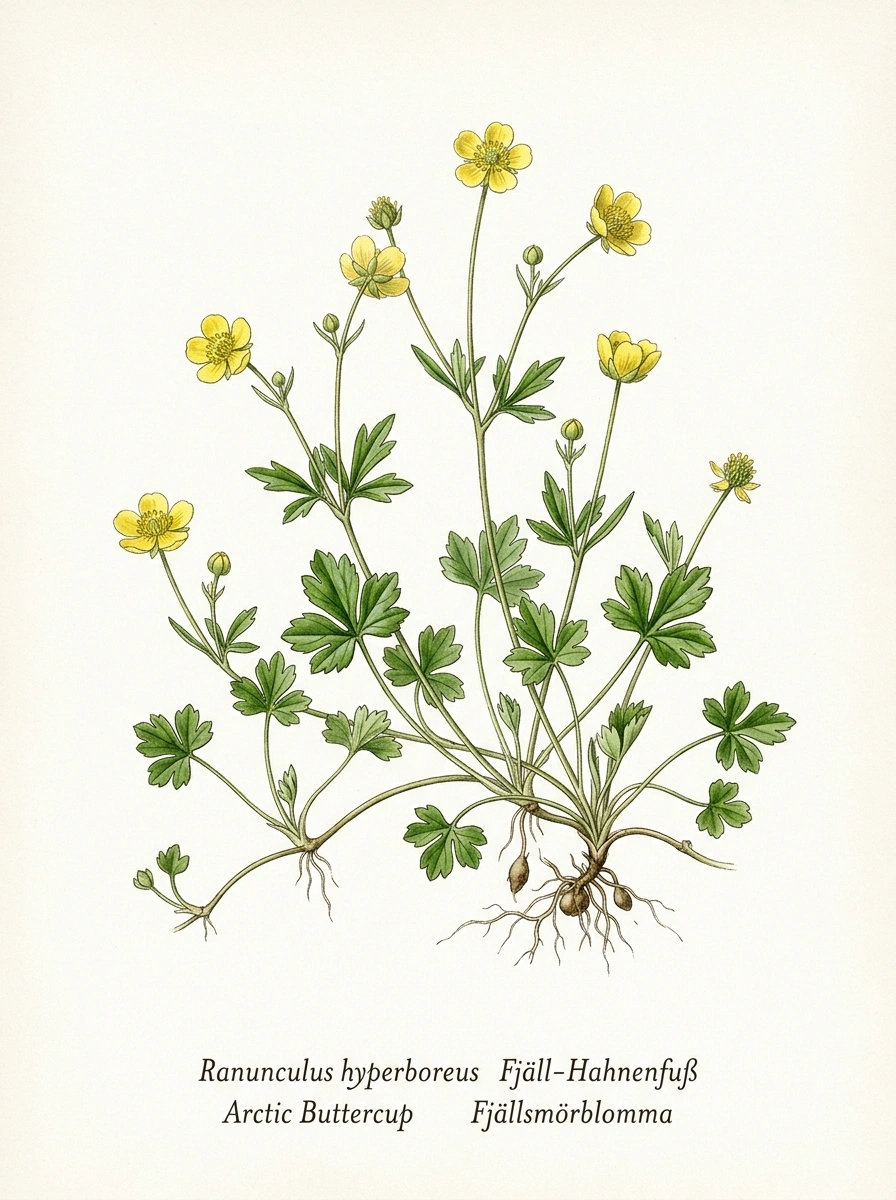
Fjäll buttercup (Ranunculus nivalis)
Schwedisch: Isranunkel | Ranunculus nivalis
A tough subarctic survivor that thrives right next to melting Skanden snowfields.
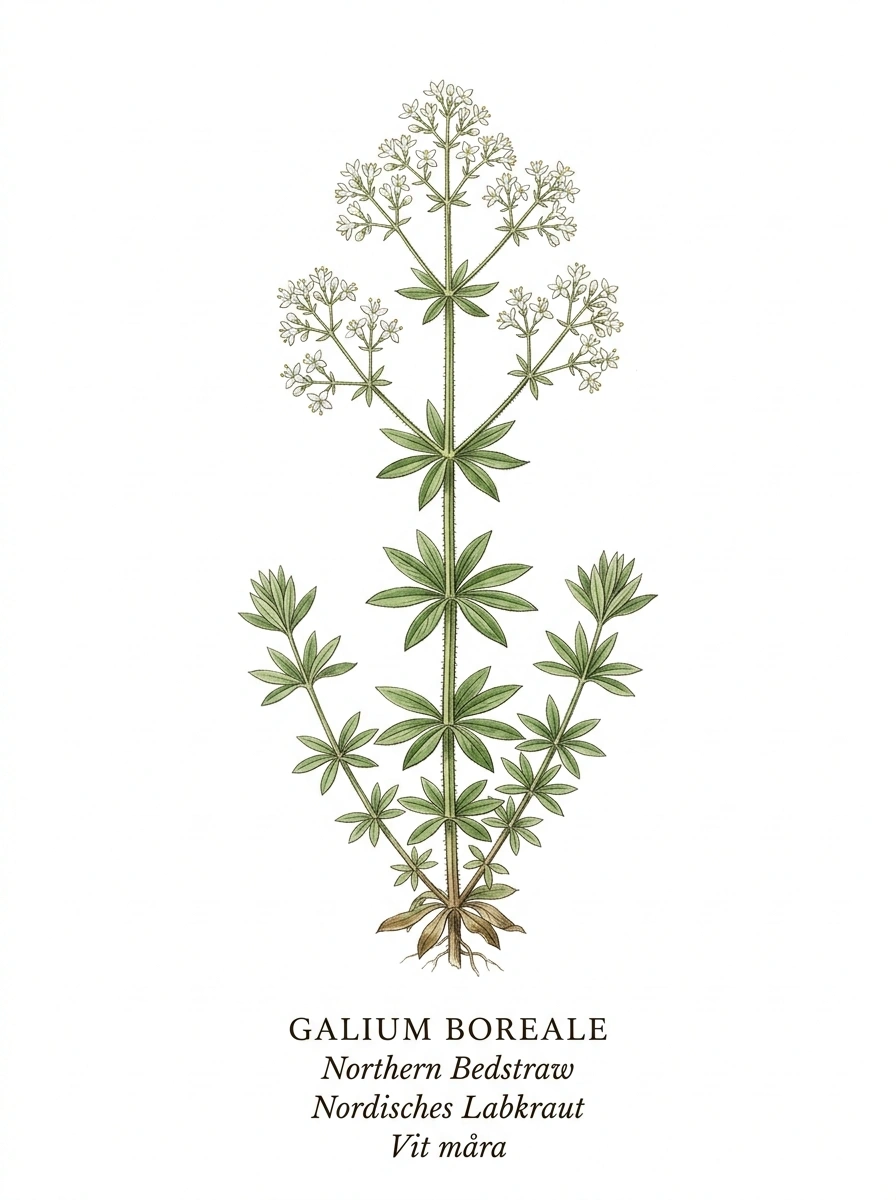
Northern bedstraw (Galium boreale)
Schwedisch: Nordmåra | Galium boreale
An upright bedstraw with whorls of four leaves and densely packed, sweet-smelling white flower clusters.
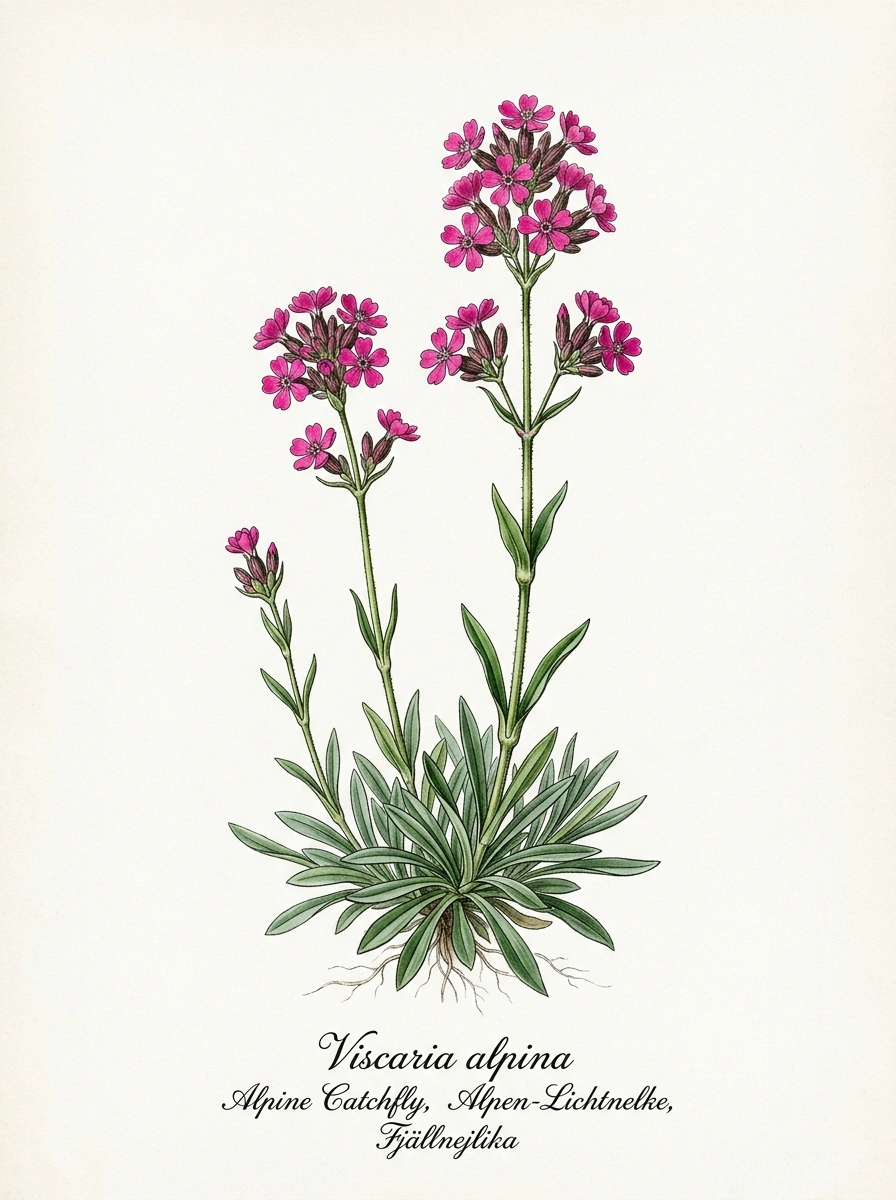
Alpine campion (Viscaria alpina)
Schwedisch: Fjälltjärnblom | Viscaria alpina
Compact subarctic carnation with bright purple-pink flower heads. Known as a geological indicator plant for copper deposits.
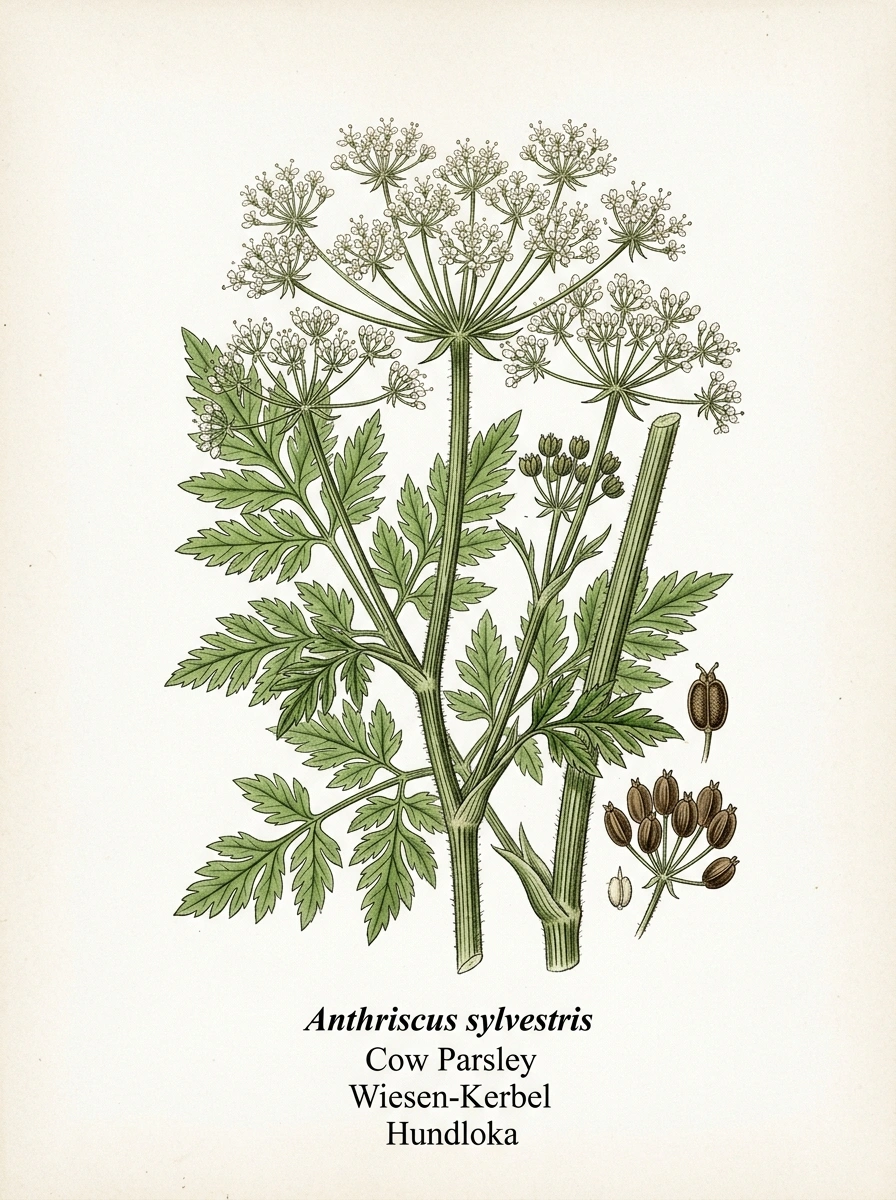
Meadow chervil (Anthriscus sylvestris)
Schwedisch: Hundloka | Anthriscus sylvestris
The stately summer meadow classic with finely feathered leaves and large white flower umbels.
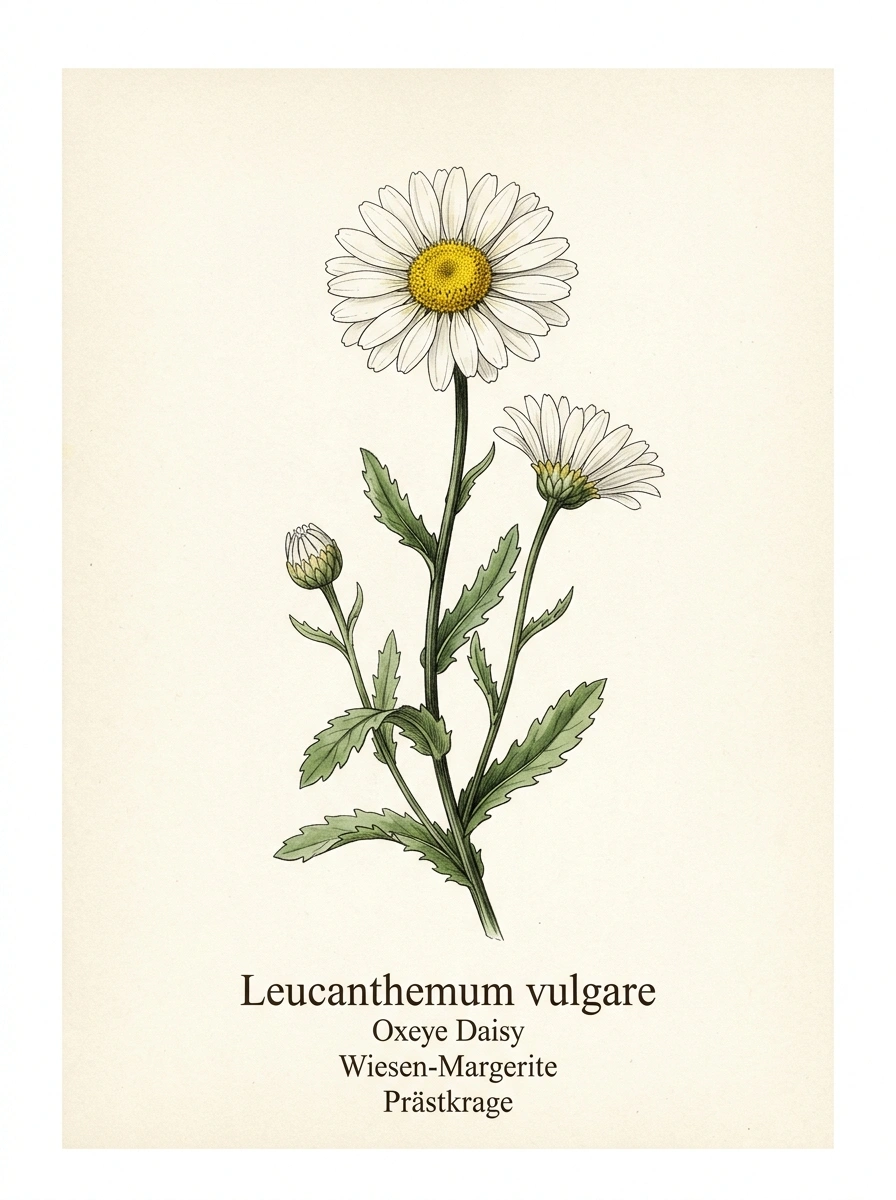
Meadow daisy (Leucanthemum vulgare)
Schwedisch: Prästkrage | Leucanthemum vulgare
Sweden's famous summer flower 'Prästkrage'. A symbol of the untouched natural meadows of Scandinavia.
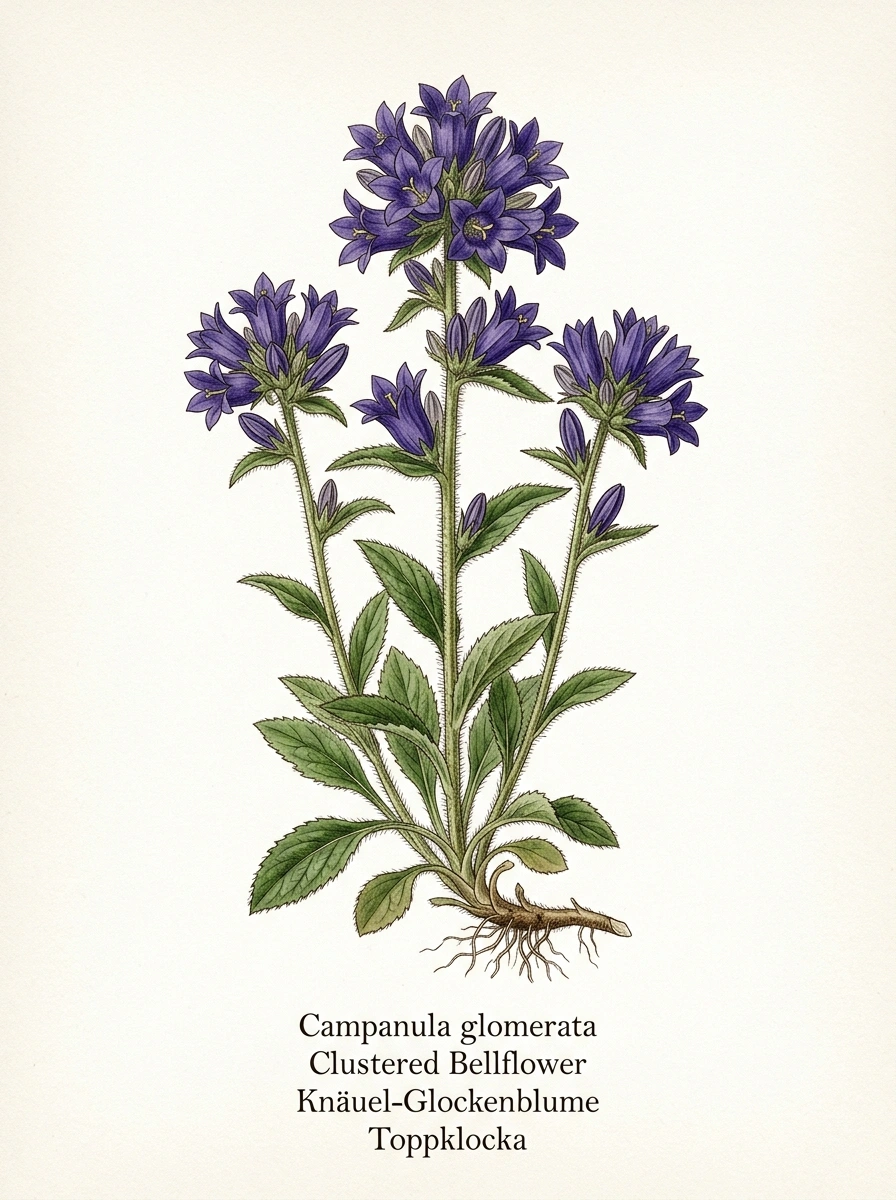
Tangled bellflower (Campanula glomerata)
Schwedisch: Toppklocka | Campanula glomerata
Upright bellflower with densely clustered, deep purple-blue flower heads at the tip of the stem.
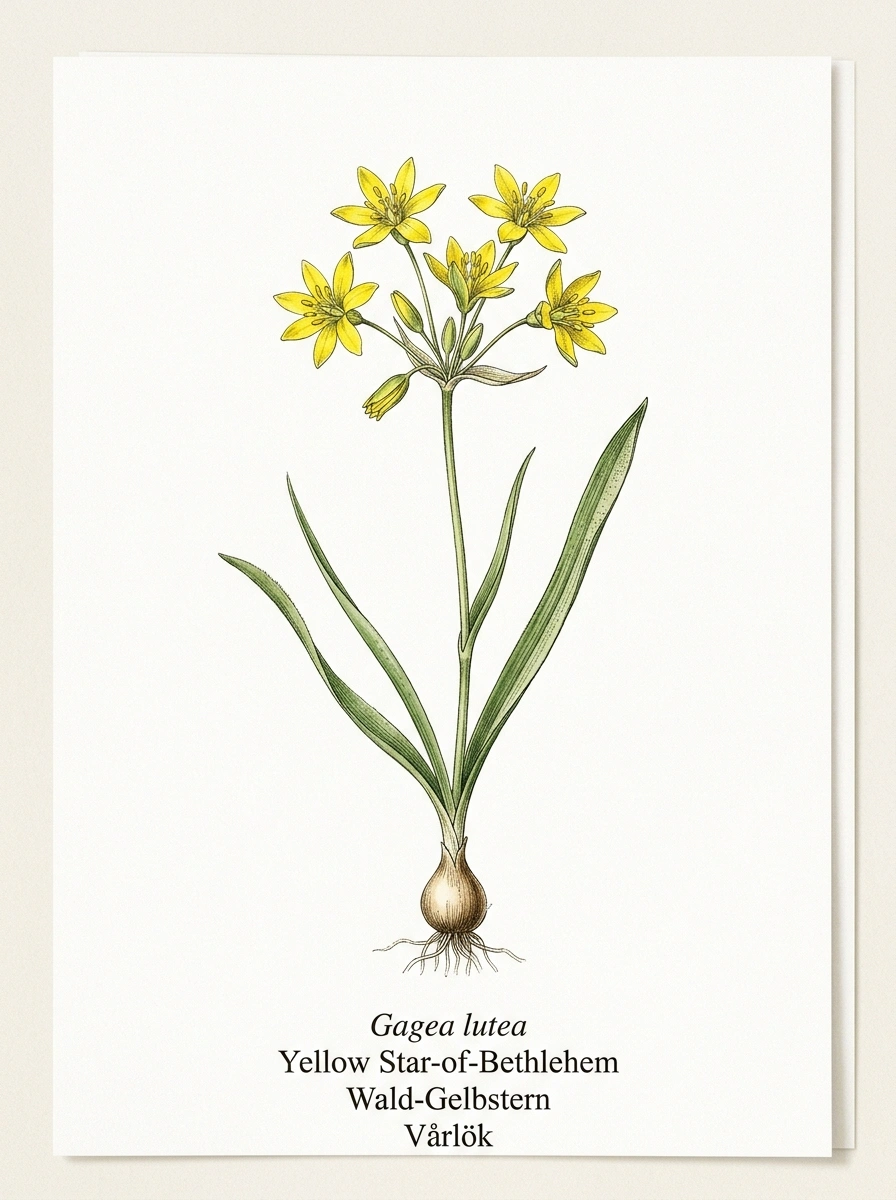
Forest Yellowstar (Gagea lutea)
Schwedisch: Vårlök | Gagea lutea
The first herald of spring from the north. Its yellow star flowers appear immediately after the snow melts.
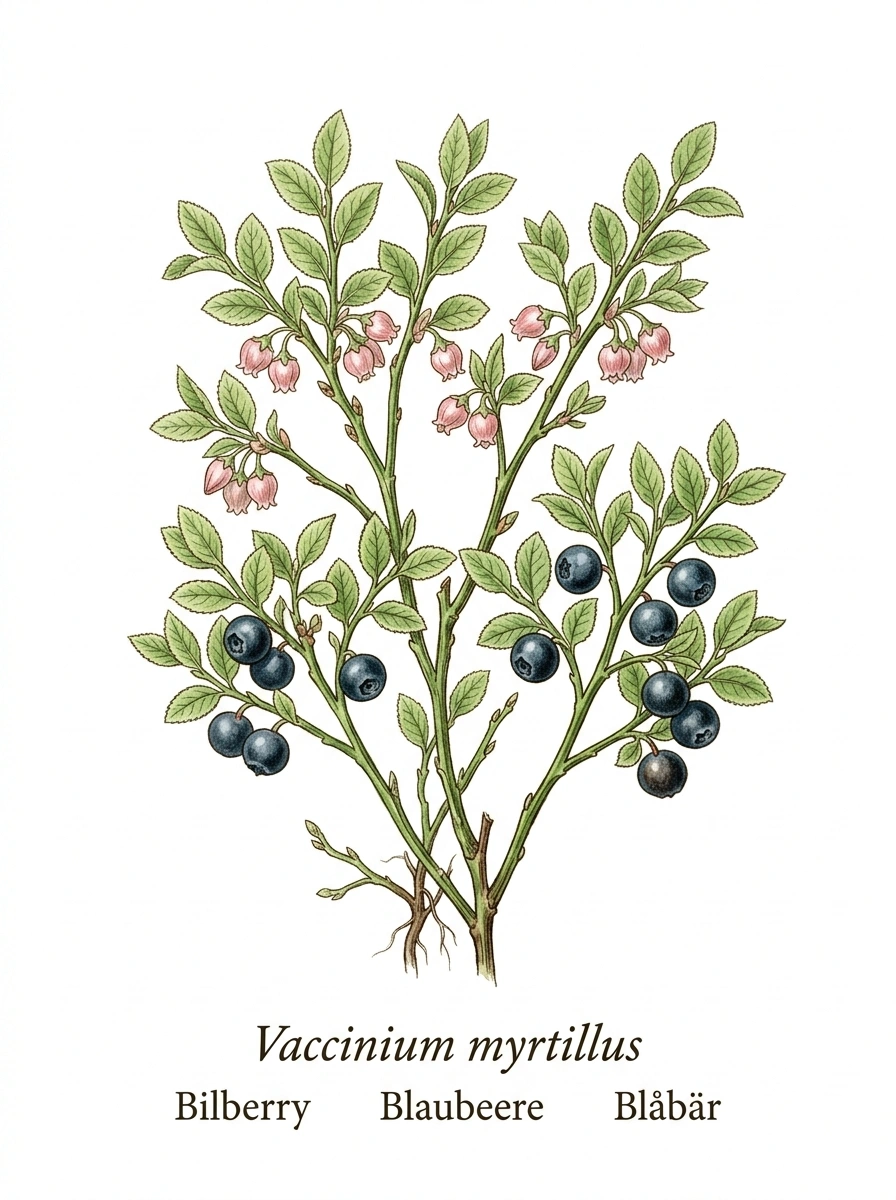
Blueberry / blueberry (Vaccinium myrtillus)
Schwedisch: Blåbär | Vaccinium myrtillus
The real European blueberry with deep blue flesh. Covers huge areas of the Swedish taiga.
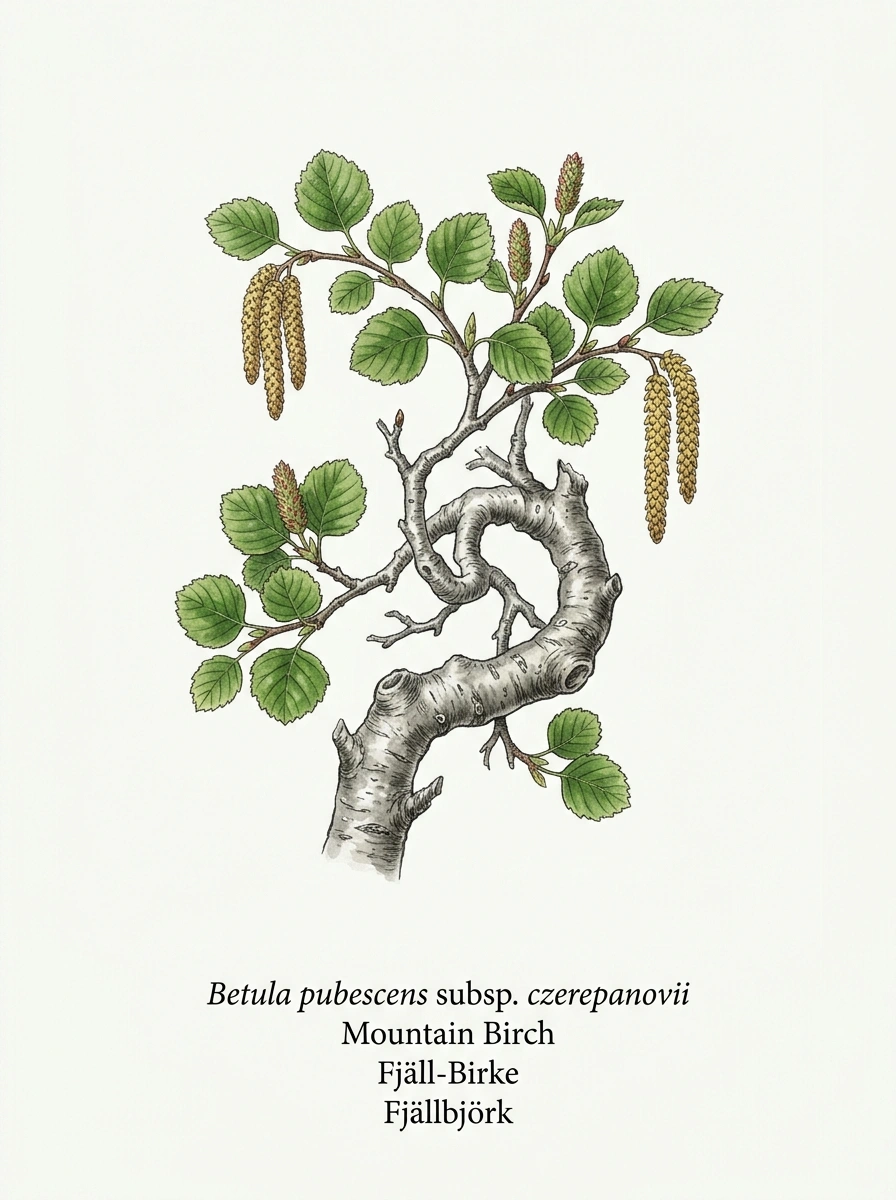
Fjäll birch (Betula pubescens subsp. czerepanovii)
Schwedisch: Fjällbjörk | Betula pubescens subsp. czerepanovii
The tough mountain birch of the subarctic tree line with characteristically twisted growth forms.
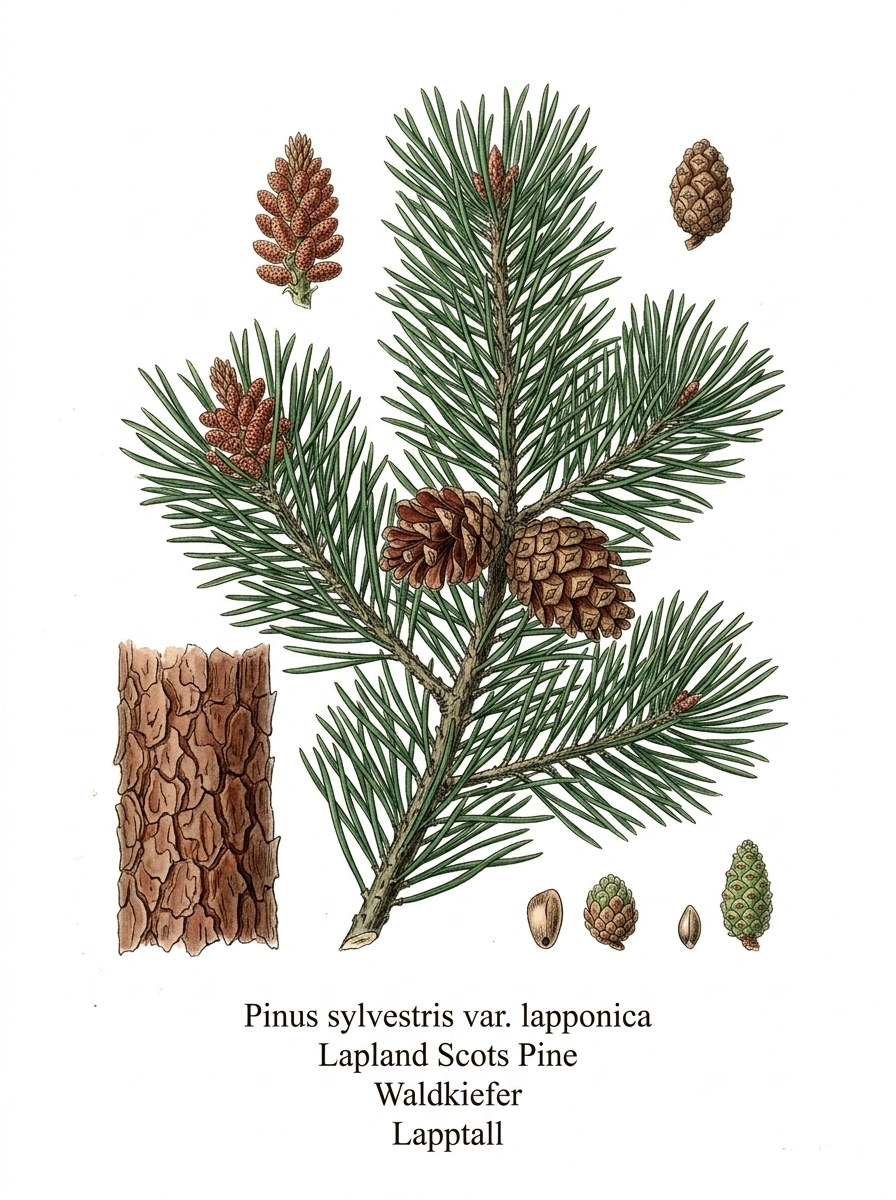
Lapland Scots pine (Pinus sylvestris var. lapponica)
Schwedisch: Lapsk tall | Pinus sylvestris var. lapponica
Extremely long-lived subspecies of Scots pine with a narrow crown. Can live over 500 years in the taiga.
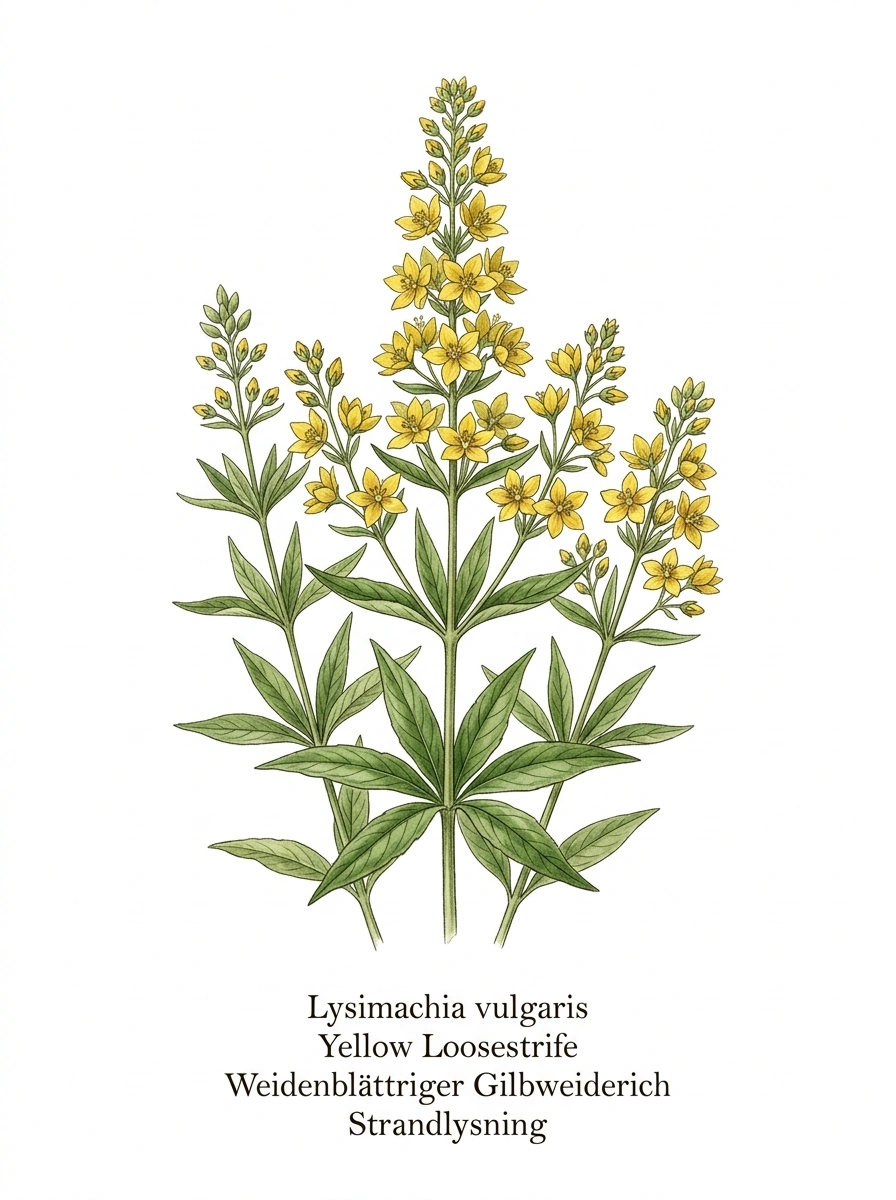
Willow-leaved loosestrife (Lysimachia vulgaris)
Schwedisch: Strandpipslog | Lysimachia vulgaris
Stately shore plant with bright yellow flower umbels along Swedish waters.
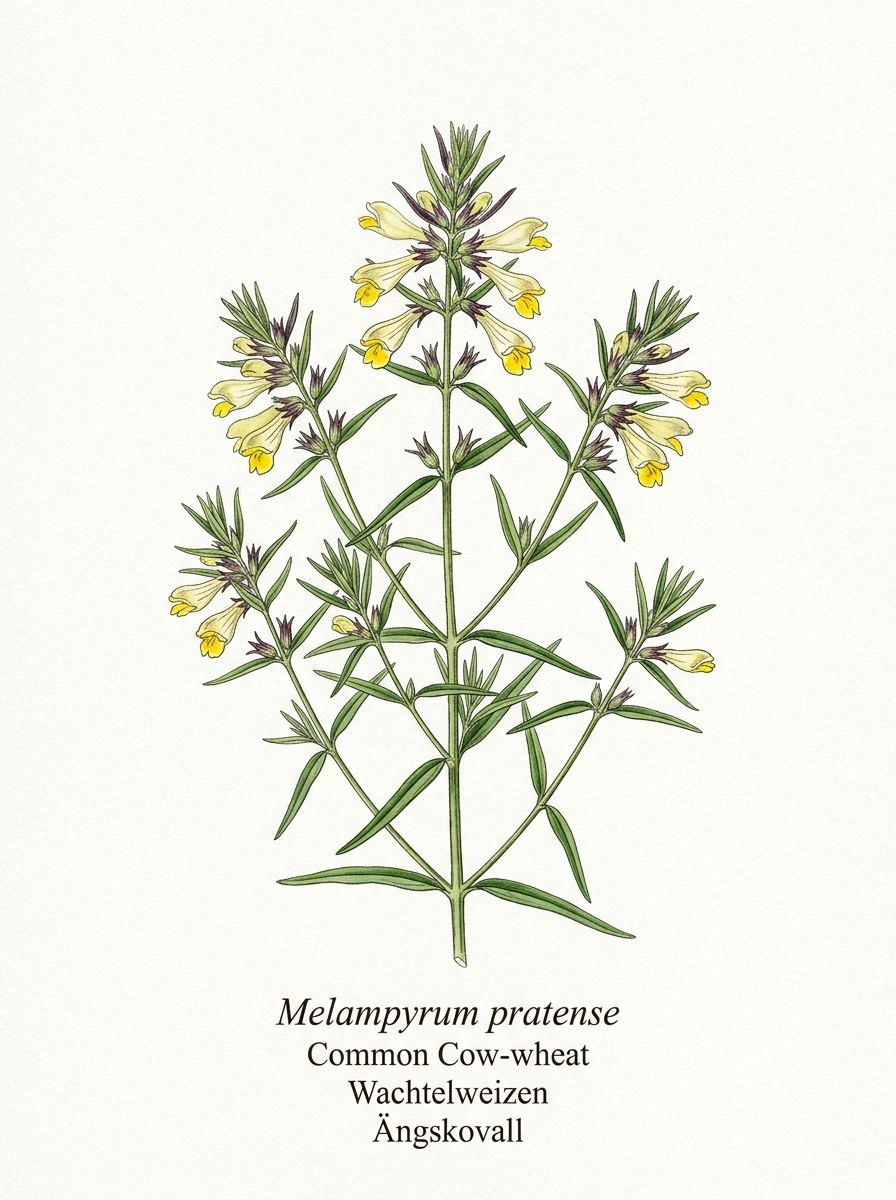
Meadow quail wheat (Melampyrum pratense)
Schwedisch: Ängskovall | Melampyrum pratense
A fascinating semi-parasite of taiga forests that taps nutrients from the roots of neighboring trees.
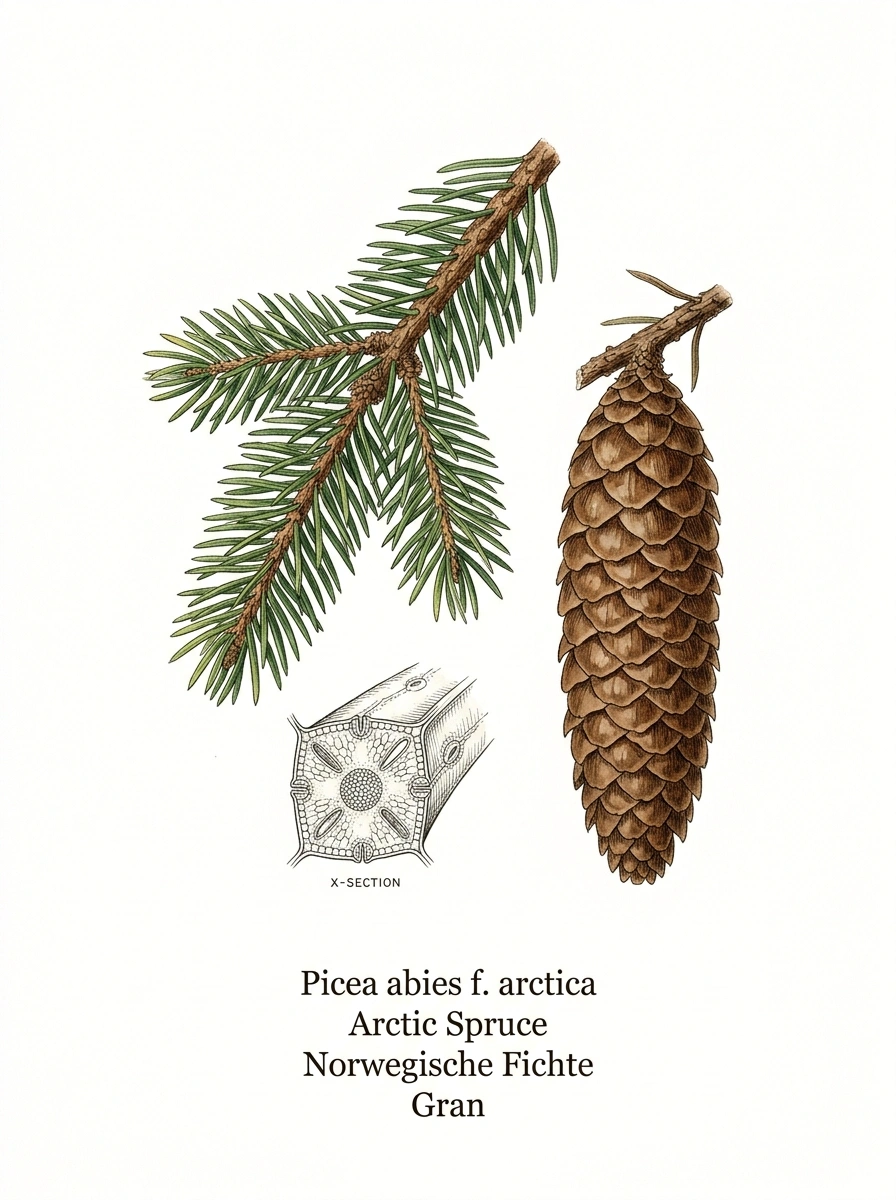
Norway spruce (Picea abies)
Schwedisch: Gran | Picea abies
The dominant conifer of the Swedish taiga. Young spring tips ('Granstrunt') sind eine Delikatesse.
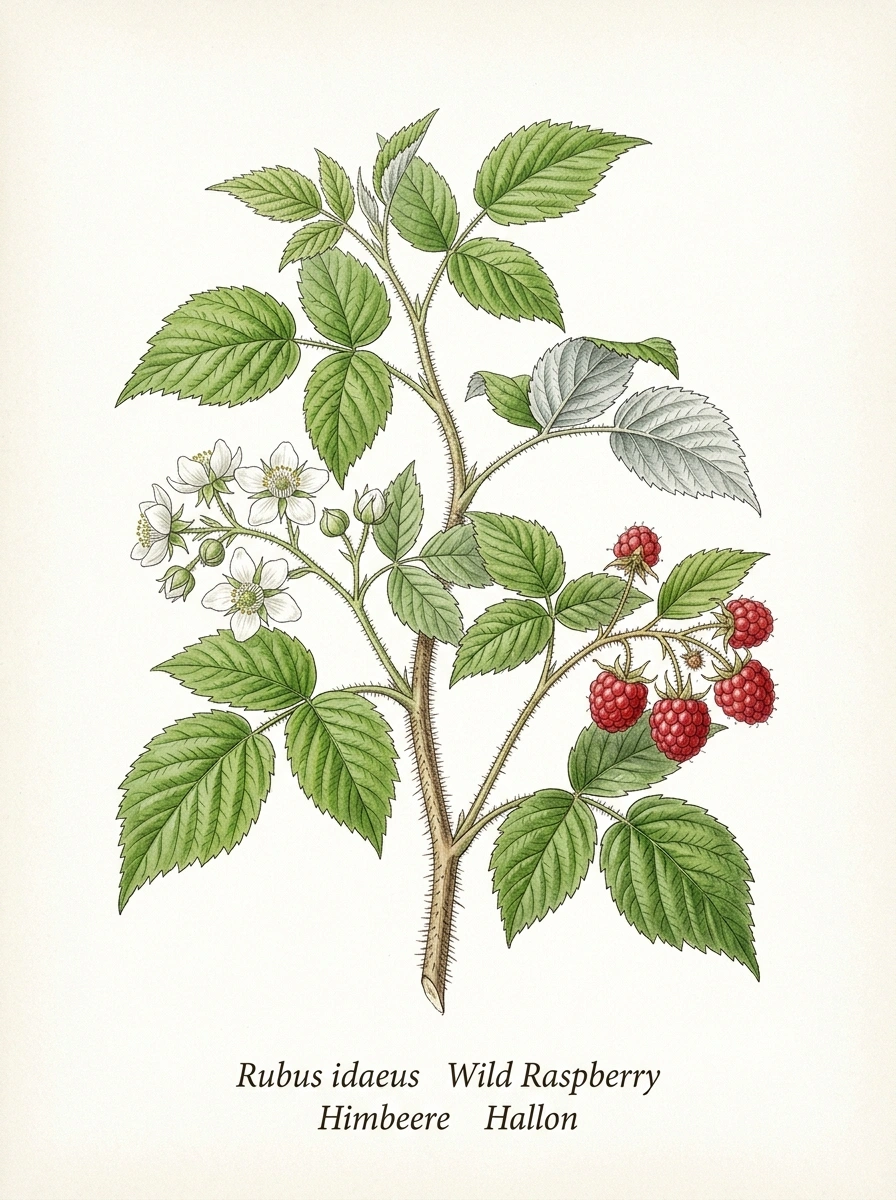
Wild raspberry (Rubus idaeus)
Schwedisch: Hallon | Rubus idaeus
The wild Scandinavian raspberry is smaller than garden varieties, but incomparably sweet and aromatic.
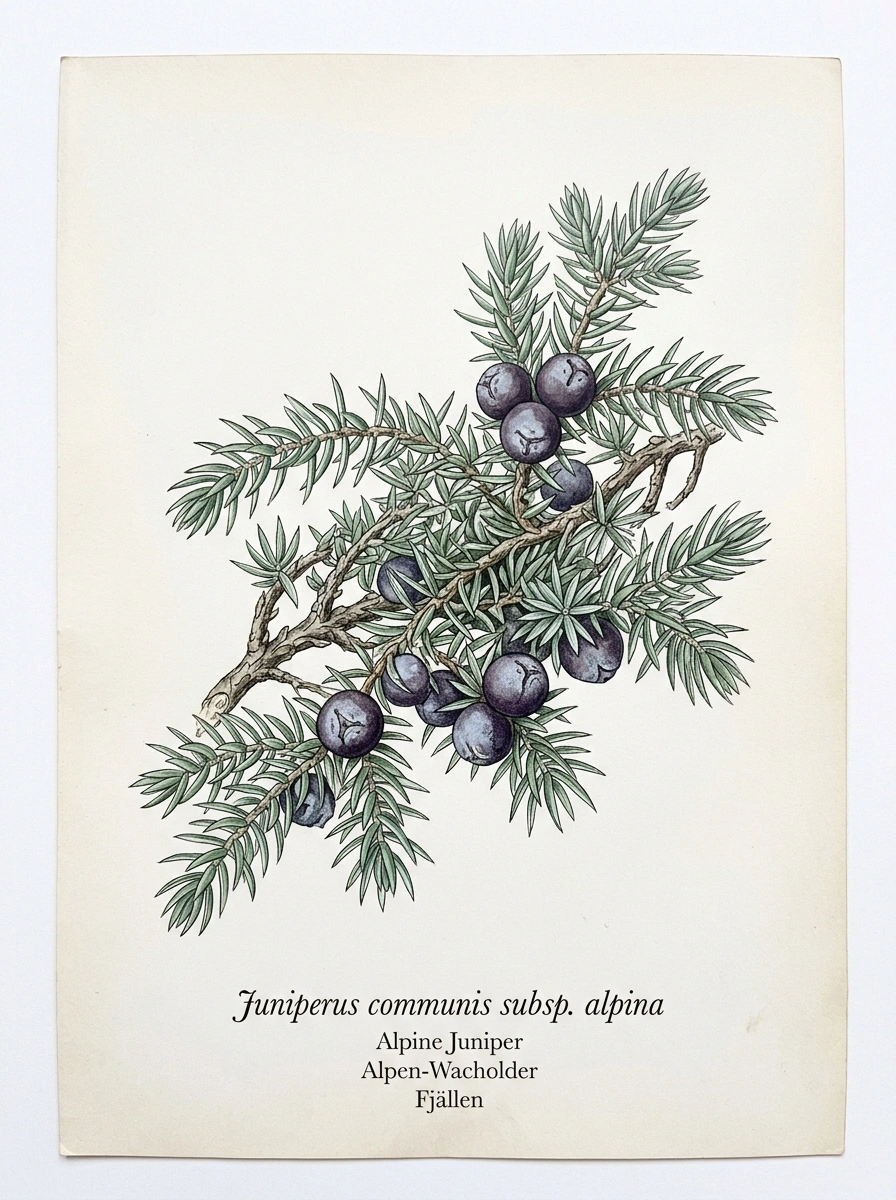
Alpine juniper (Juniperus communis subsp. alpina)
Schwedisch: Fjällen / Kp-En | Juniperus communis subsp. alpina
Evergreen carpet-forming dwarf shrub from the Nordic mountains with spicy-smelling juniper berries.
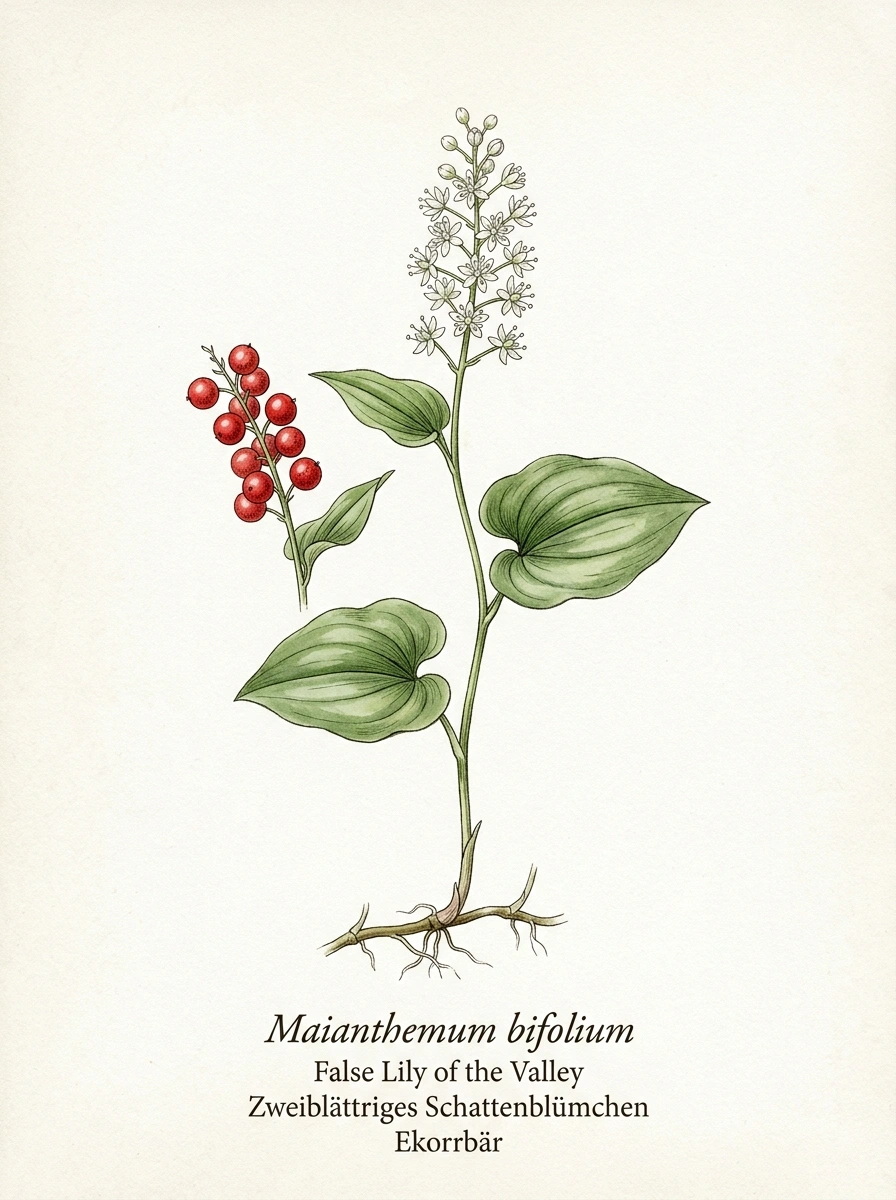
Two-leaved shade flower (Maianthemum bifolium)
Schwedisch: Ekorrbär | Maianthemum bifolium
Dainty forest plant with exactly two heart-shaped leaves, white fragrant flowers and poisonous red autumn berries.
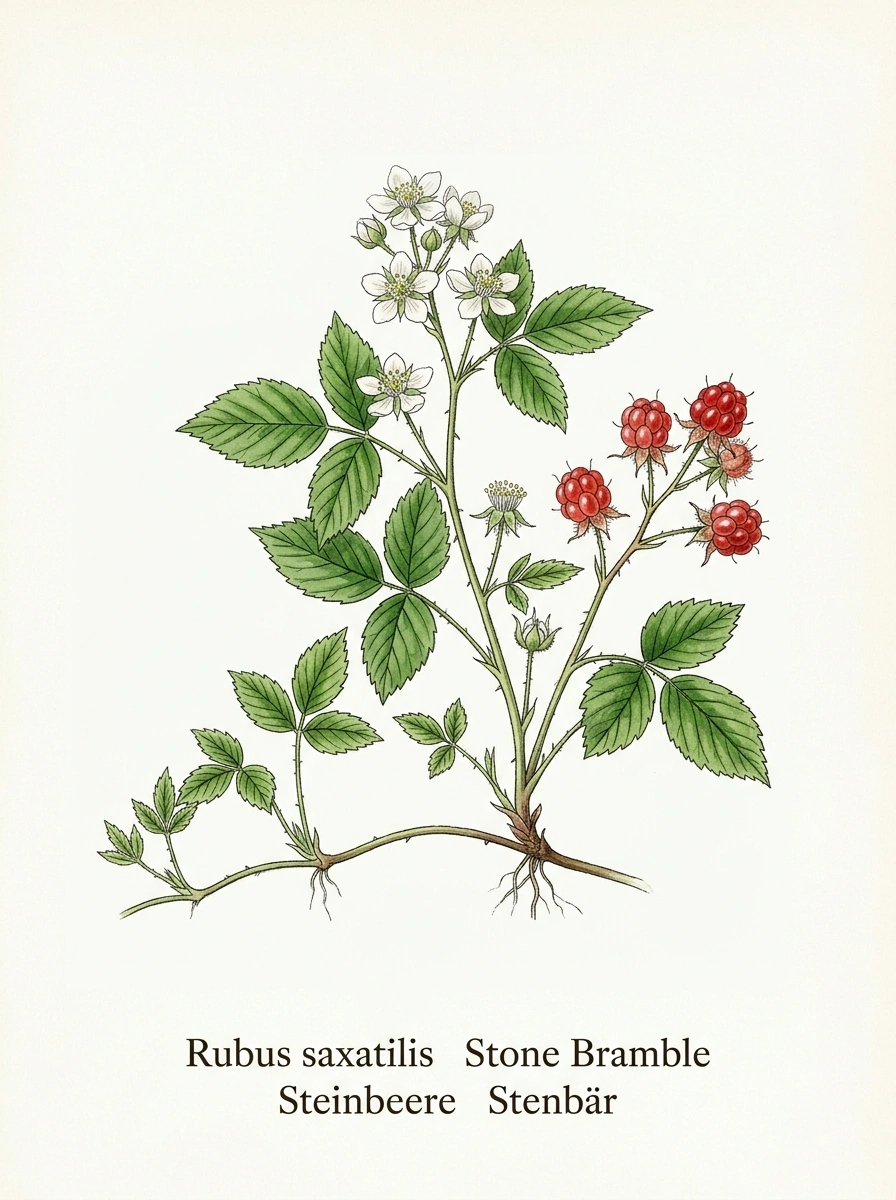
Stoneberry (Rubus saxatilis)
Schwedisch: Stenbär | Rubus saxatilis
Shiny scarlet fruits with hard core filling. A refreshing wild berry from stony taiga forests.
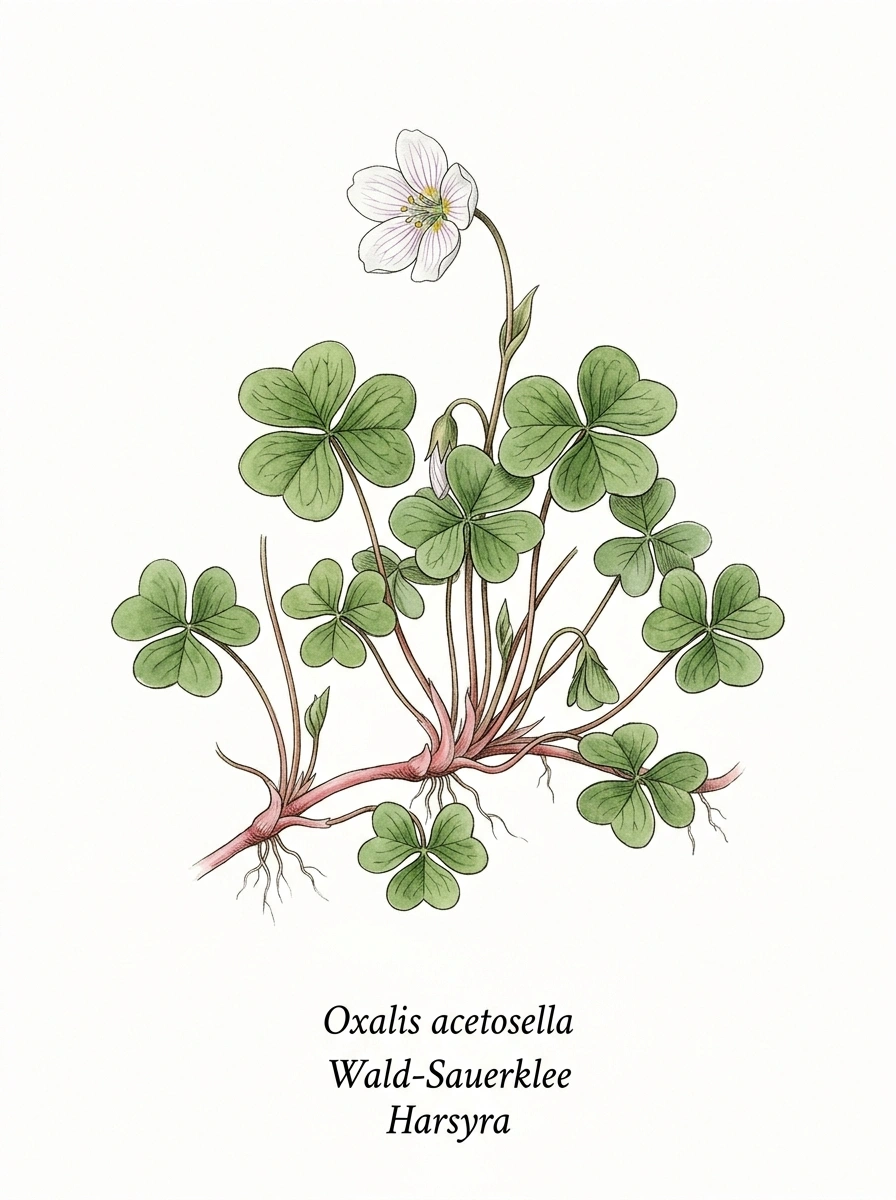
Wood sorrel (Oxalis acetosella)
Schwedisch: Harsyra | Oxalis acetosella
Delicate forest herb with three-leaf clover leaves, reddish-veined white flowers and a refreshingly sour taste.
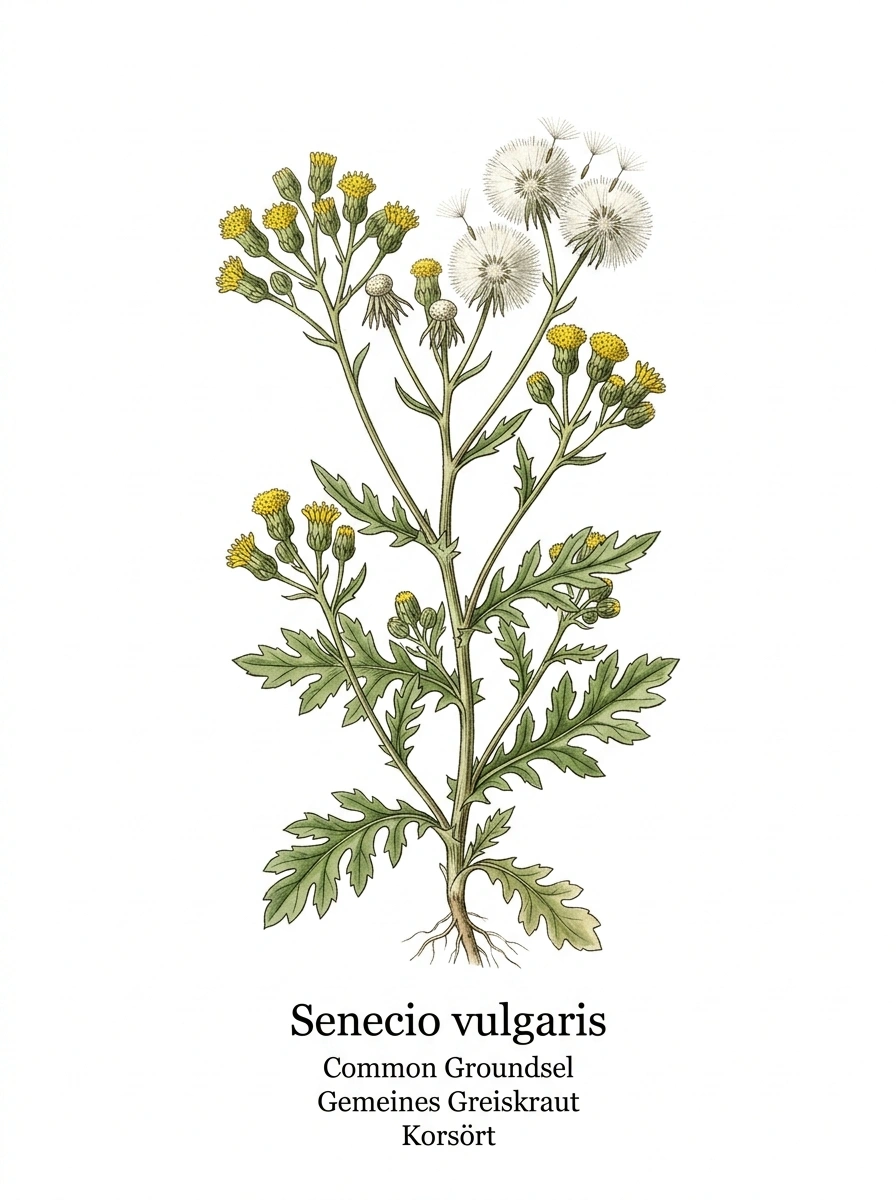
Common groundsel (Senecio vulgaris)
Schwedisch: Korsört | Senecio vulgaris
Undemanding pioneer plant with small yellow flower heads without ray florets and feathery seed heads.
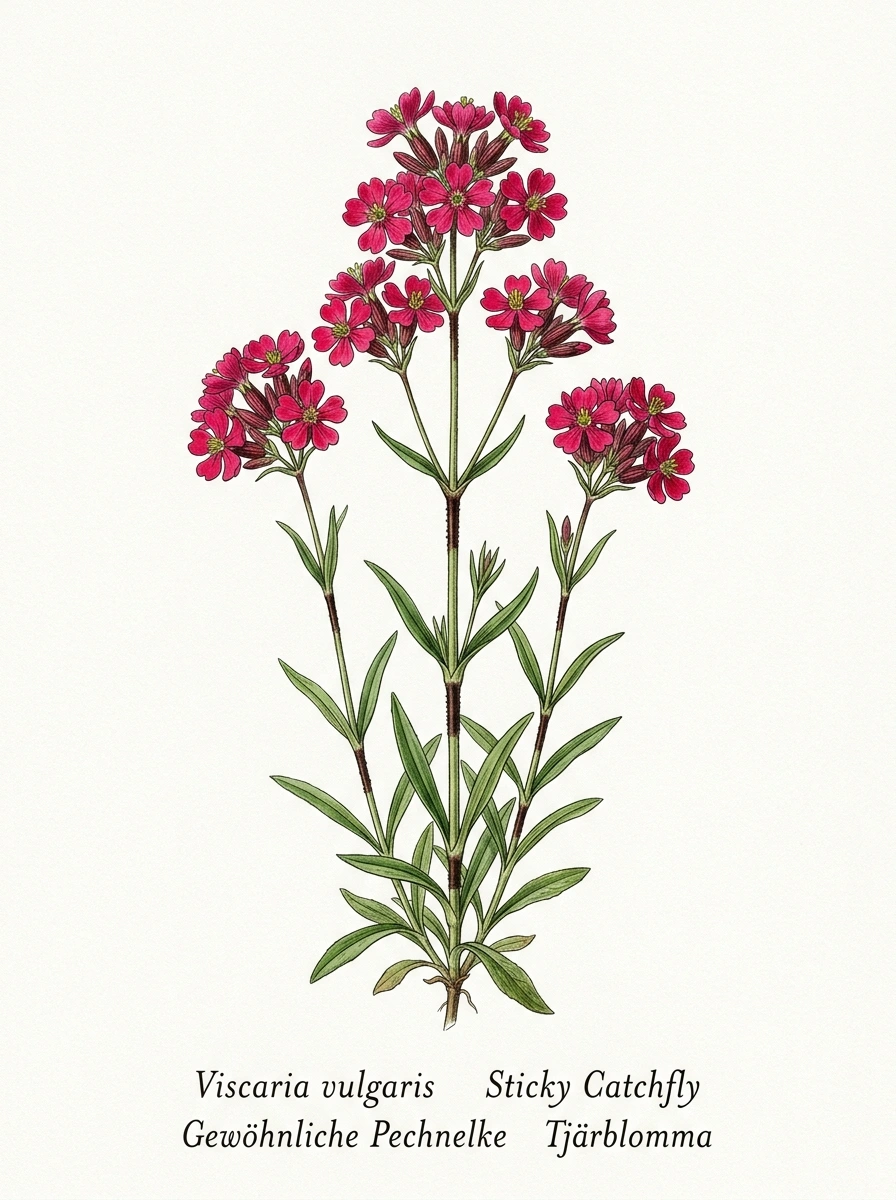
Common pitch pink (Viscaria vulgaris)
Schwedisch: Tjärblom | Viscaria vulgaris
Spectacular magenta carnation with a sticky 'tar ring' on the stem to protect against ants.
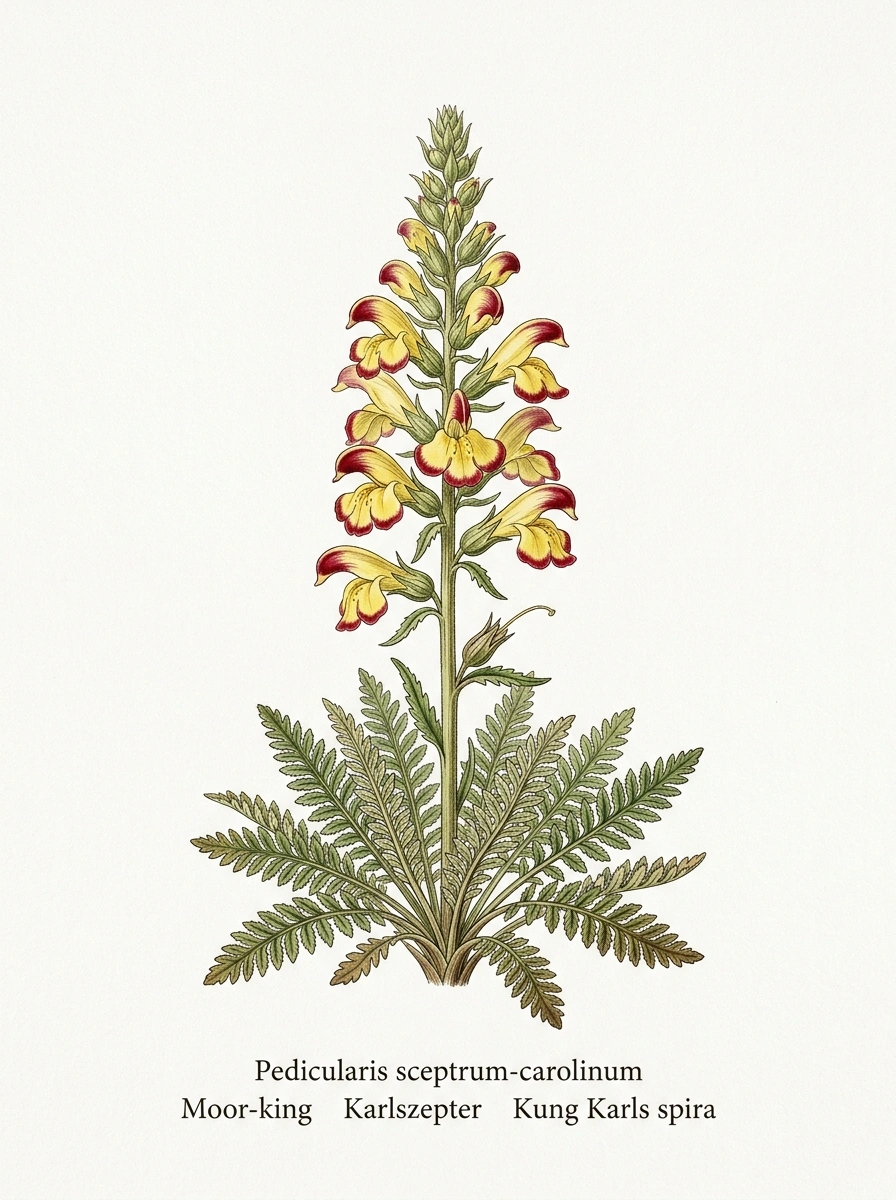
King Charles' Sceptre / Moor-king (Pedicularis sceptrum-carolinum)
Schwedisch: Kung Karls spira | Pedicularis sceptrum-carolinum
The royal magnificent plant of northern Swedish moors with proud yellow flower candles up to 80 cm high.
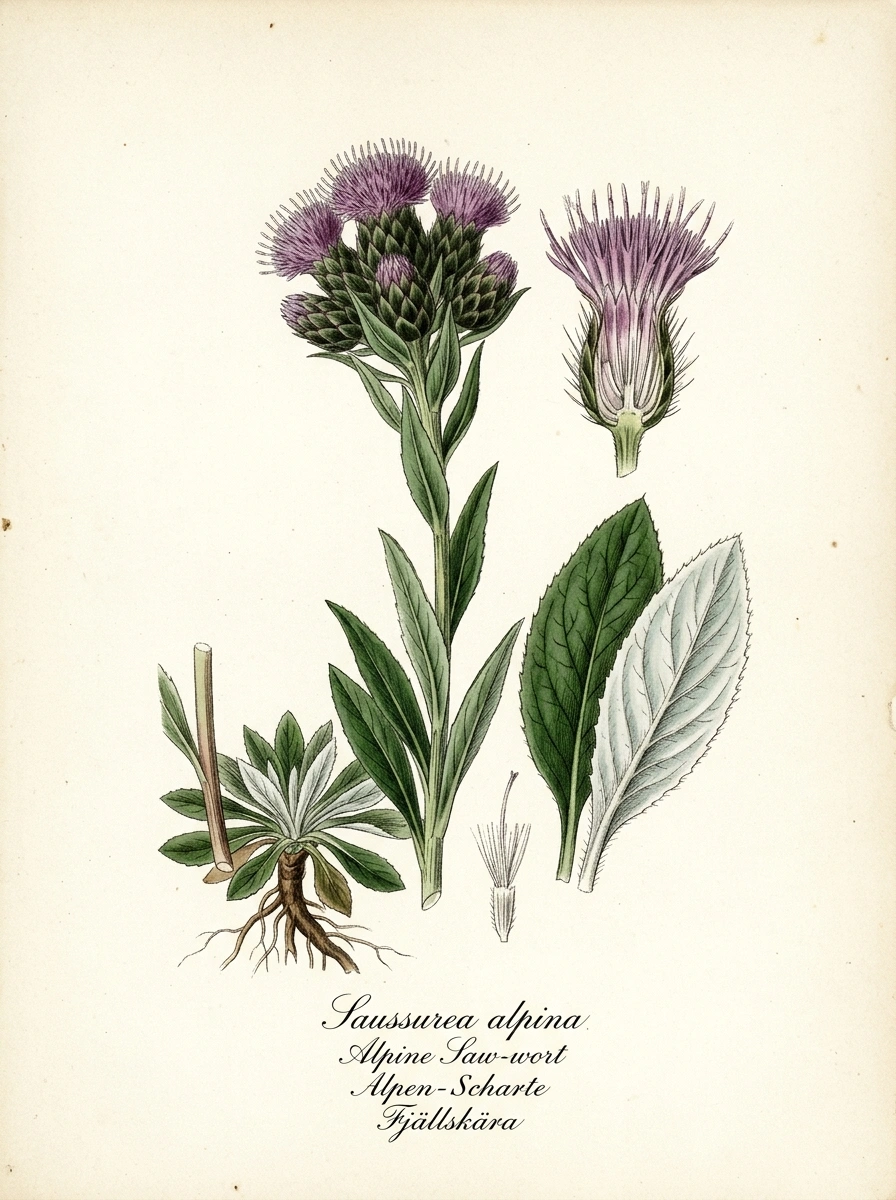
Alpine scallop (Saussurea alpina)
Schwedisch: Fjällskära | Saussurea alpina
Subarctic composite perennial with purple flower heads that smell surprisingly sweet of vanilla and cloves.
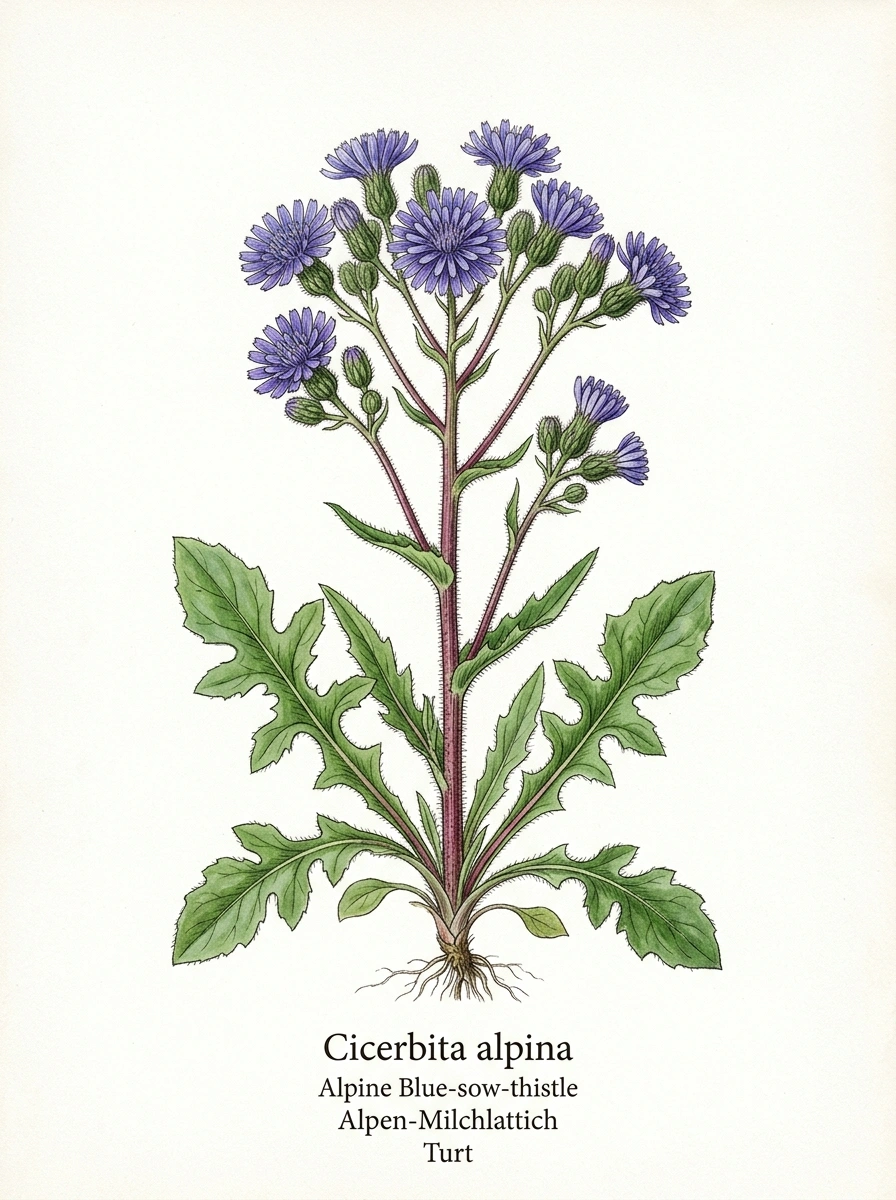
Alpine milk lettuce (Cicerbita alpina)
Schwedisch: Turt | Cicerbita alpina
A bizarre giant of the Scandinavian mountain ravine forests with blue flower heads. Swedish 'Turt'.
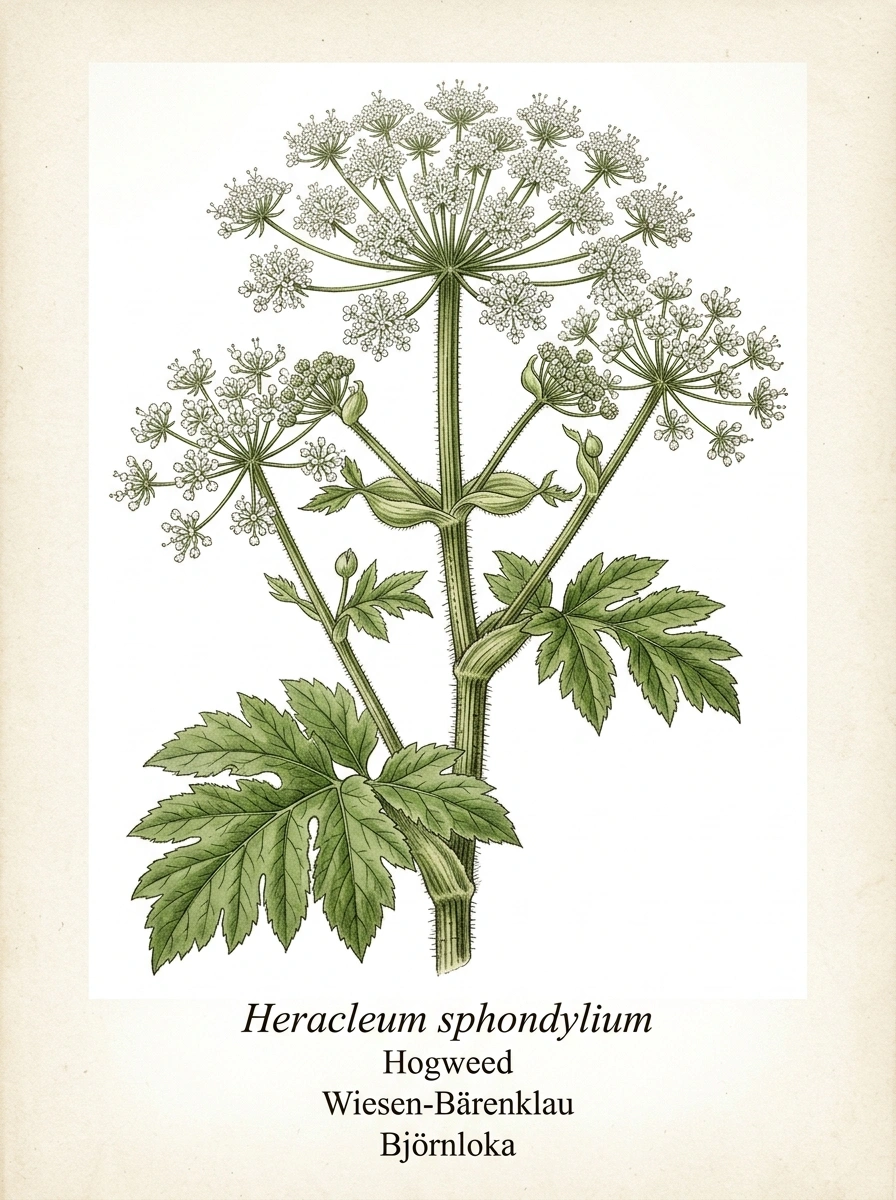
Meadow hogweed (Heracleum sphondylium)
Schwedisch: Björnloka | Heracleum sphondylium
The native, less dangerous relative of the giant hogweed with large white umbels and rough-haired leaves.
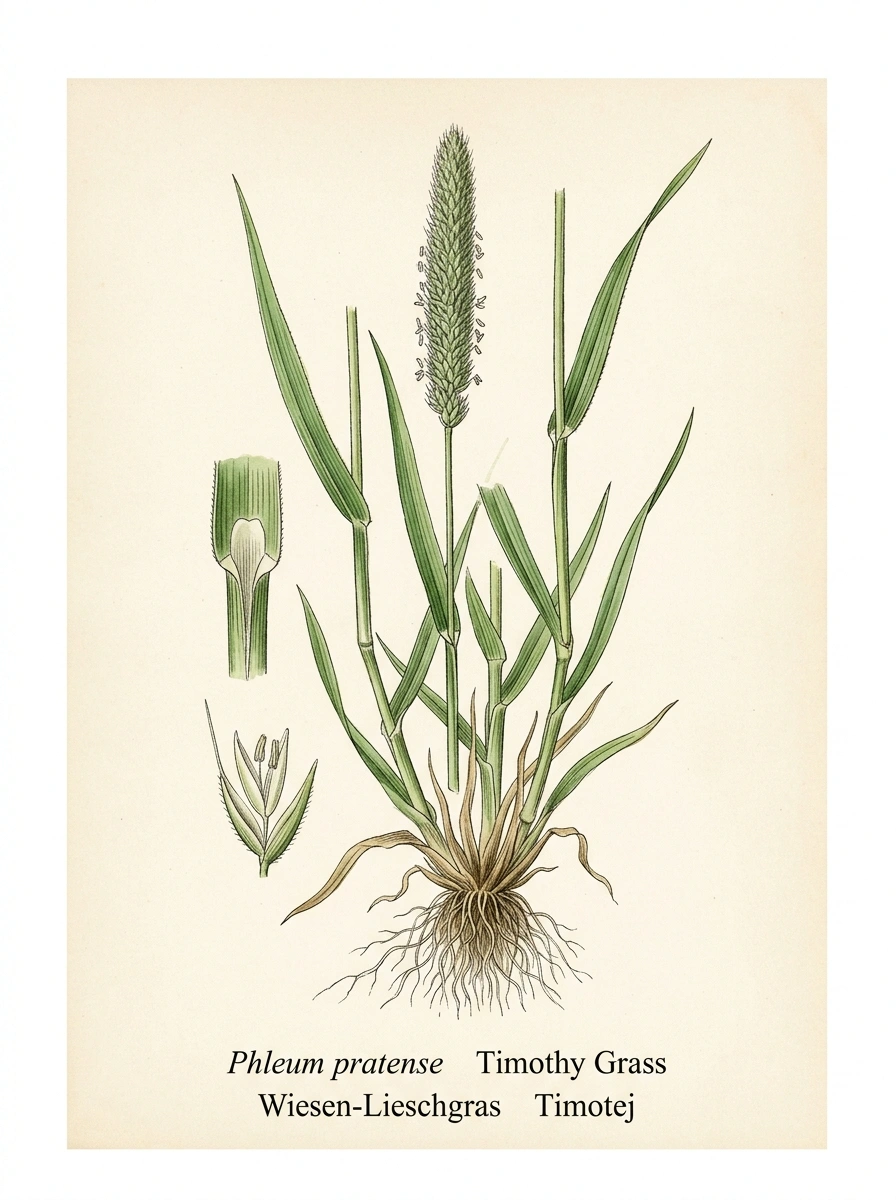
Meadow timothy (Phleum pratense)
Schwedisch: Timotej | Phleum pratense
Scandinavia's most famous forage grass 'Timotej' mit starrer, walzenförmiger Ährenrispe.
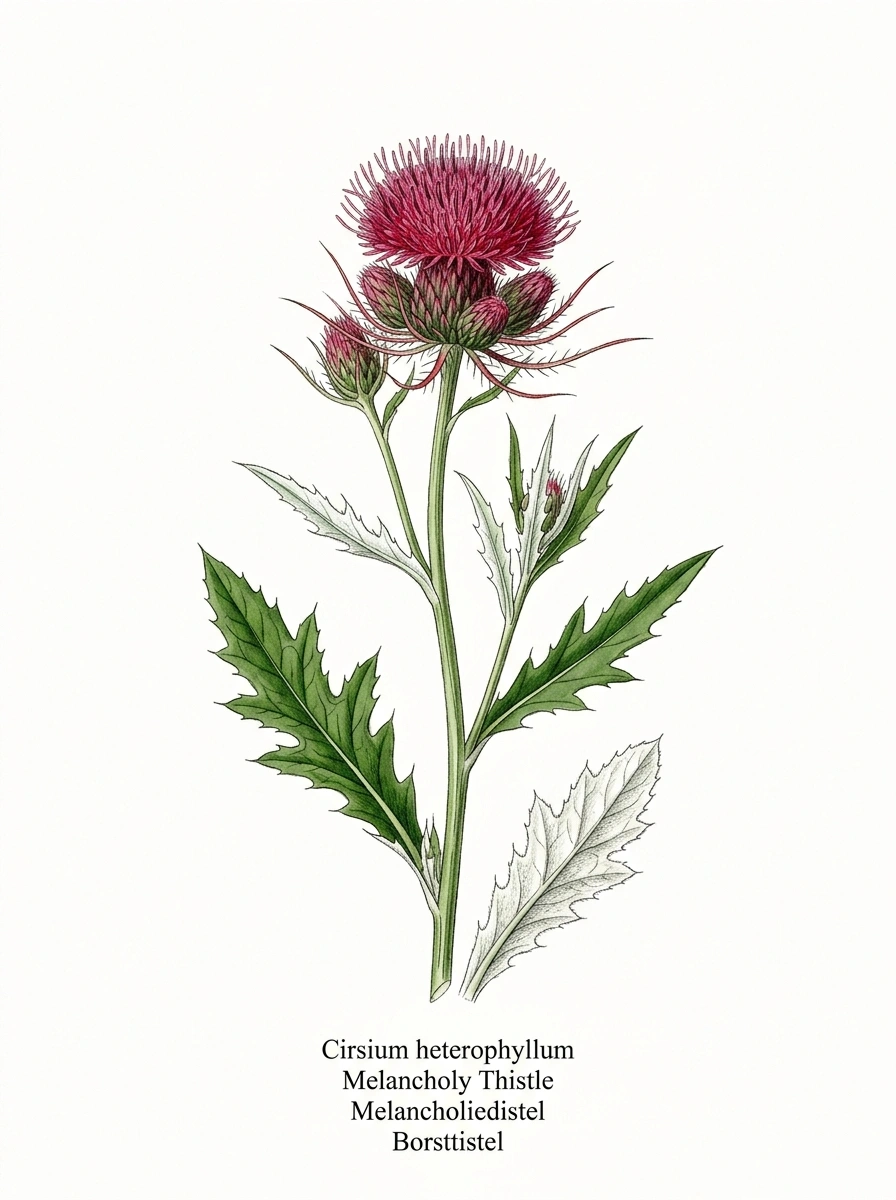
Melancholy thistle (Cirsium heterophyllum)
Schwedisch: Borsttistel | Cirsium heterophyllum
The almost thornless thistle with bright purple-red flower heads and white felt undersides of the leaves.
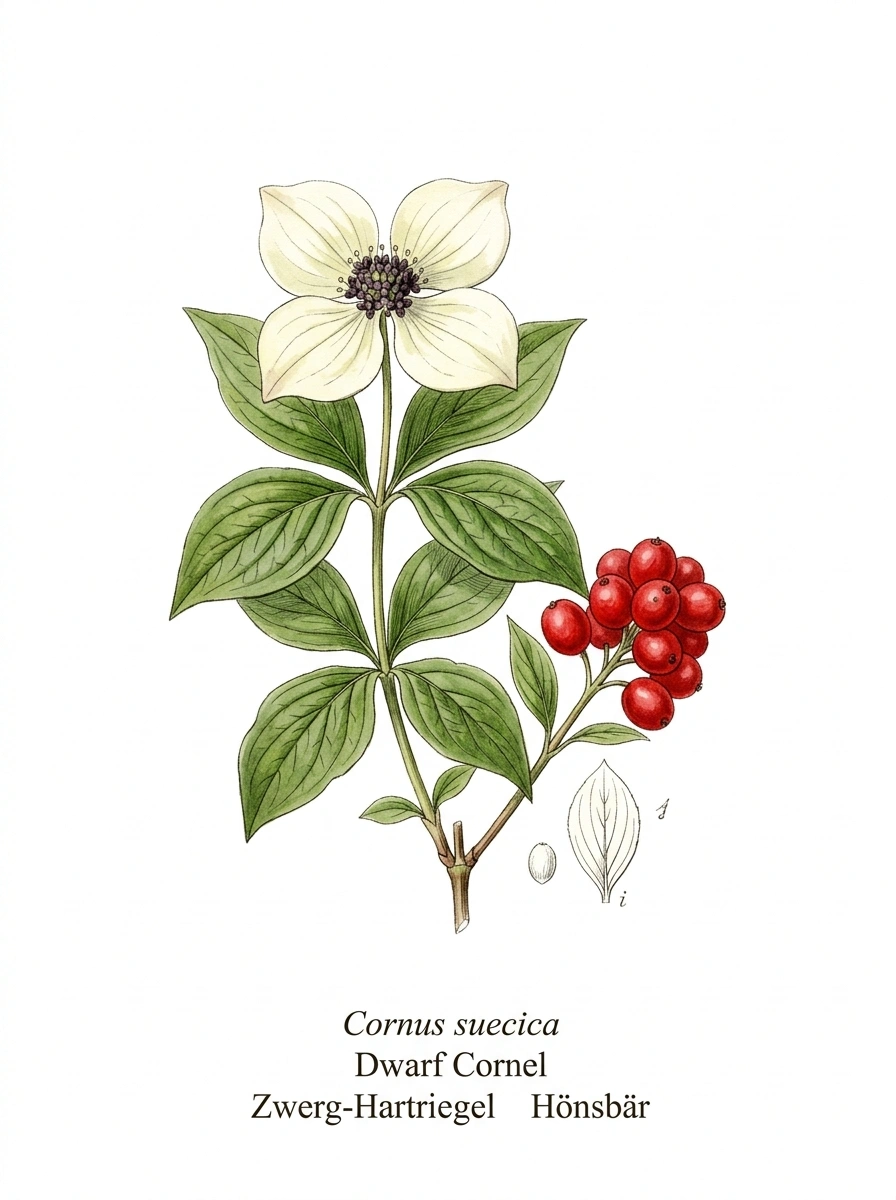
Swedish dwarf dogwood (Cornus suecica)
Schwedisch: Hönsbär | Cornus suecica
Botanical landmark of northern Sweden. Four snow-white bracts simulate a giant flower; bright red berries in autumn.